> For the complete documentation index, see [llms.txt](https://docs.proxyman.com/llms.txt). Markdown versions of documentation pages are available by appending `.md` to page URLs; this page is available as [Markdown](https://docs.proxyman.com/advanced-features/compose.md).
# Compose new Request
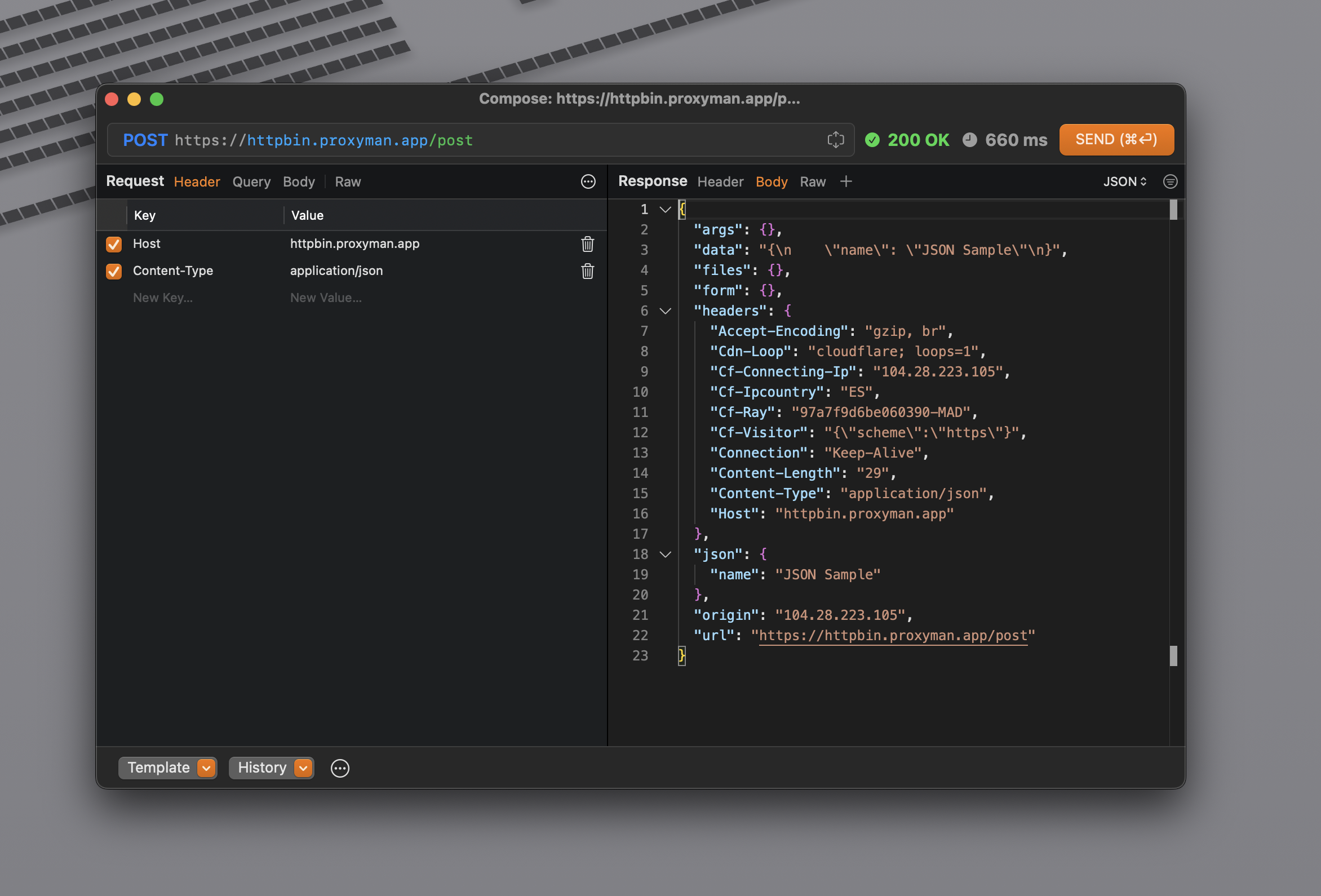
Make new HTTPS Requests to your server, and inspect the HTTPS Response. It's a simple version of Postman
## 1. What's it?
"Compose new Request" tool is a handy tool to help developers:
* Compose an HTTP/HTTPS Request and send it to your service. It's similar to Paw, Insomnia, and Postman.
* Quickly test your APIs without depending on your app client.
* Support Header, Query, URL, Form, JSON Body
* Support Raw Message
* Support multipart body
* Preset template: Empty Request, GET Request, Post Request with JSON or Form.
{% hint style="info" %}
You can reuse your request data for new requests. Please check out the [Edit & Repeat](/advanced-features/edit-and-repeat.md) page.
{% endhint %}
Make a HTTPS Requests with Proxyman
## 2. How to use
You can open the tool by either:
* Click on the Compose button on the main navigation bar
* Tools -> Compose

1. Enter the URL
2. Select HTTP Method
3. Modify the Header, Param, Body, Raw Message
4. Click the Send button.
 
## 3. Template
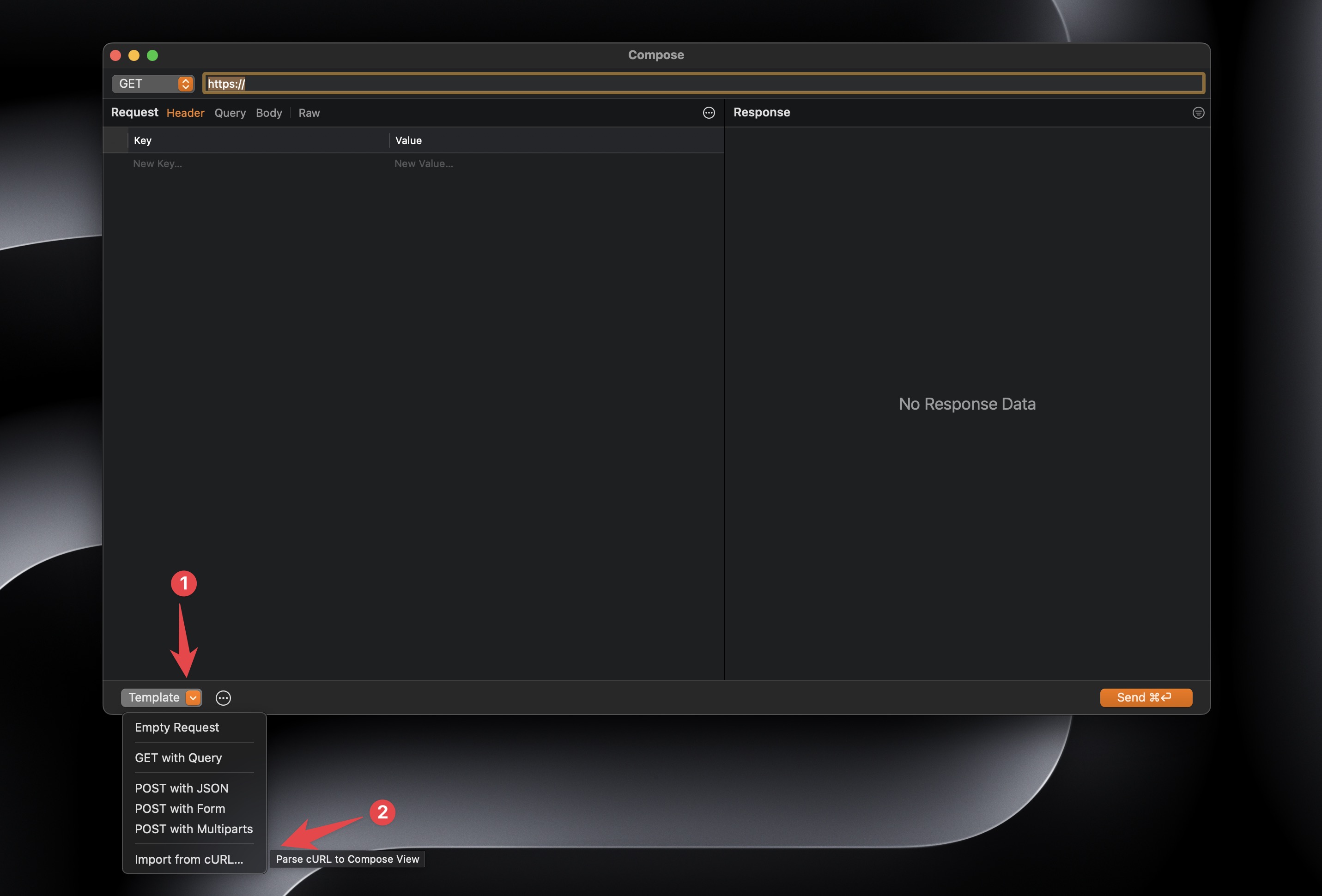
Proxyman also supports a few request templates.
* GET with Query
* Post with JSON
* Post with Form
* Post with multiparts
* Import from cURL

## 4. Import from cURL
You can import your cURL, which you can copy from a Network Tab in Google Chrome and make a request with the Compose Tool.
import cURL
{% hint style="success" %}
You can simply paste your cURL to the URL Text View, Proxyman will tries to parse your cURL
{% endhint %}
## 5. History Request
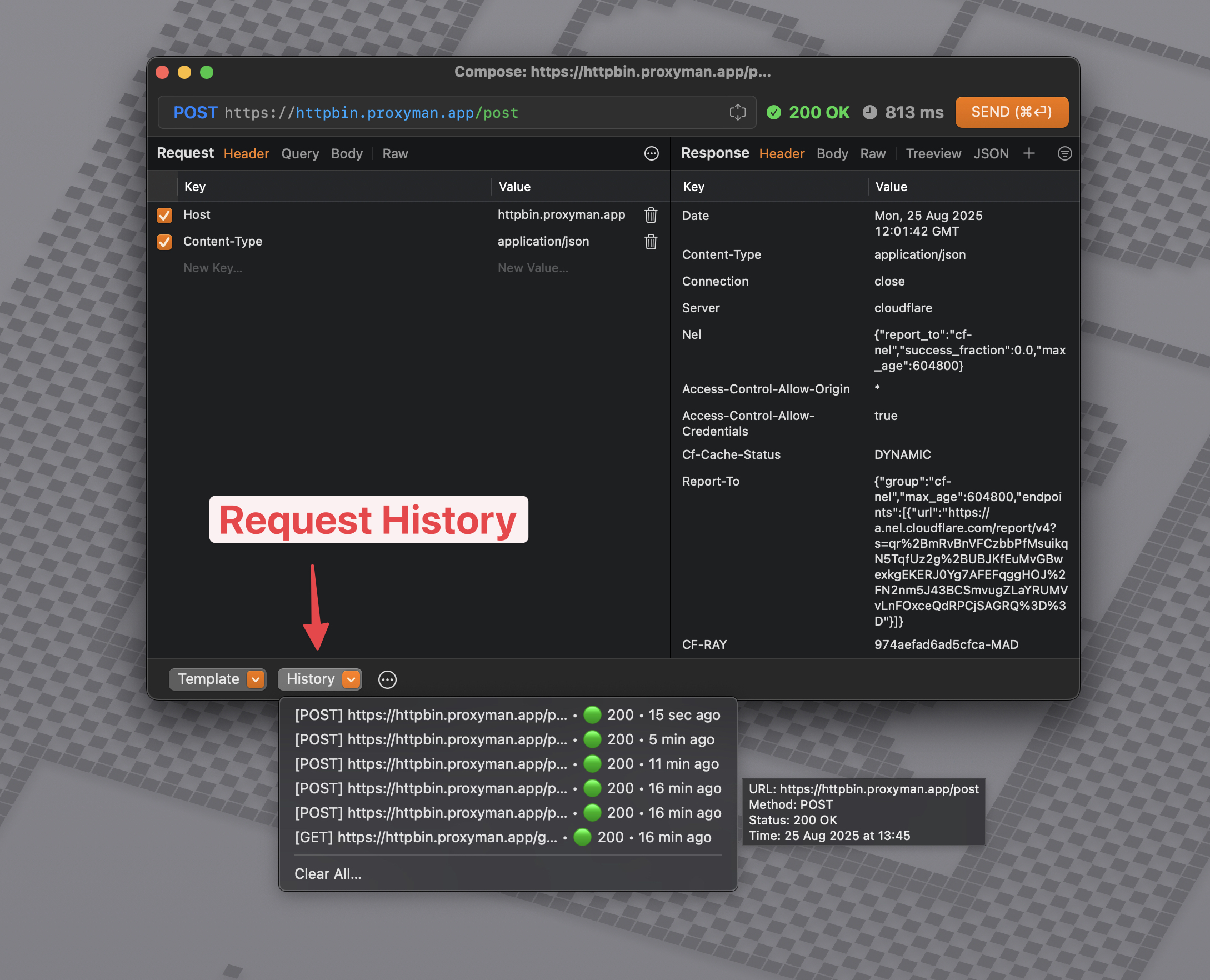
From Proxyman macOS 5.24.0, Proxyman will store your requests/responses in the History List.
* ✅ Useful to preview your previous Request/Response
Request History in the Compose View
## 6. Settings
* **SettingsRequest Timeout**: In Setting -> Tools Tab -> Request Timeout: Define a second that the Request will timeout. Use 0 to disable it. Available on Proxyman 4.13.0 or later